---
title: "FSA-A: Precision, Efficiency, and Easy Handling of Flexible Spacer"
description: Discover the FSA-A from LiSEC, a breakthrough in flexible spacer processing that enhances precision, efficiency, and ease of use in glass production.
image: https://blog.lisec.com/hubfs/FSA_Gasperlmair_02_web.jpg
---
- [BLOG](https://blog.lisec.com/)
- [CONTACT](https://www.lisec.com/about-lisec/contact)
- [DOWNLOADS](https://www.lisec.com/news/downloads)
- [Hotline & ONLINESUPPORT](https://www.lisec.com/competence/after-sale-service/hotline-online-support)
- [SUCCESS STORIES](https://www.lisec.com/news/success-stories-1)
- [](https://www.lisec.com/contact/)
- [](https://business-portal.lisec.com/signin.php)
- 
### CHOOSE YOUR LANGUAGE
- [English](https://blog.lisec.com/fsa-a)
- [Deutsch](https://blog.lisec.com/de/fsa-a)
- SOLUTIONS
- Systems & Lines
- [Glass Cutting Line](https://www.lisec.com/solutions/systems-lines#collapse-42)
- [Insulating glass line](https://www.lisec.com/solutions/systems-lines#collapse-911)
- [Glass Processing Line](https://www.lisec.com/solutions/systems-lines#collapse-43)
- [Laminated Glass Line](https://www.lisec.com/solutions/systems-lines#collapse-199)
- [Individual Machines](https://www.lisec.com/solutions/individual-machines)
- [Glass Cutting](https://www.lisec.com/solutions/individual-machines#collapse-34)
- [Insulating Glass Production](https://www.lisec.com/solutions/individual-machines#collapse-34)
- [Sorting & Logistics Systems](https://www.lisec.com/solutions/individual-machines#collapse-44)
- [Flat Glass Processing](https://www.lisec.com/solutions/individual-machines#collapse-36)
- [Glass Processing & Wash](https://www.lisec.com/solutions/individual-machines#collapse-219)
- [Quality management](https://www.lisec.com/solutions/individual-machines#collapse-46)
- [Tempering](https://www.lisec.com/solutions/individual-machines#collapse-46)
- [base](https://www.lisec.com/solutions/individual-machines#collapse-38)
- [Success Stories](https://www.lisec.com/solutions/individual-machines#collapse-209)
- [Software](https://www.lisec.com/solutions/software)
- [Software for Business Management](https://www.lisec.com/solutions/software/#collapse-82)
- [Software for Production Management](https://www.lisec.com/solutions/software/#collapse-120)
- [Software for Shopfloor Management](https://www.lisec.com/solutions/software/#collapse-123)
- [Software on machines](https://www.lisec.com/solutions/software/#collapse-124)
- [Preowned machines](https://www.lisec.com/solutions/preowned-machines/)
- COMPETENCE
- [AFTER SALES / SERVICES](https://www.lisec.com/competence/after-sale-service/)
- [HOTLiNE & ONLiNE SUPPORT](https://www.lisec.com/competence/after-sale-service/hotline-online-support/)
- [LiSEC Process Control](https://www.lisec.com/competence/after-sale-service/lisec-process-control/)
- [Live Support System - LiSEC.eye](https://www.lisec.com/competence/after-sale-service/live-support-system-liseceye/)
- [LiSERV](https://www.lisec.com/competence/after-sale-service/liserv/)
- [My LiSEC](https://www.lisec.com/competence/after-sale-service/my-lisec/)
- [Spare Parts](https://www.lisec.com/competence/after-sale-service/spare-parts/)
- [LiSAIR Express Delivery](https://www.lisec.com/competence/after-sale-service/lisair-express-delivery/)
- [Contacts spare parts service](https://www.lisec.com/competence/after-sale-service/contacts-spare-parts-service/)
- [Inspection and Maintenance](https://www.lisec.com/competence/after-sale-service/inspection-and-maintenance/)
- [Installation](https://www.lisec.com/competence/after-sale-service/installation/)
- [LONGLiFE](https://www.lisec.com/competence/after-sale-service/longlife/)
- [Training](https://www.lisec.com/competence/after-sale-service/training/)
- [FAQ](https://www.lisec.com/competence/after-sale-service/faq/)
- [PROCESS DEVELOPMENT](https://www.lisec.com/competence/process-development/products)
- [Products](https://www.lisec.com/competence/process-development/products)
- [References](https://www.lisec.com/competence/process-development/references#?)
- [Contact](https://www.lisec.com/competence/process-development/contact/glastech-produktions-und-verfahrenstechnik-gmbh)
- [CE Declaration of Performance](https://www.lisec.com/competence/process-development/contact/glastech-produktions-und-verfahrenstechnik-gmbh)
- [GLASTECH](https://www.lisec.com/competence/process-development/glastech)
- [GLASTECH CERTIFICATE](https://www.lisec.com/footer/news/downloads/#?category=750&subcategory=751)
- [SPACER](https://www.lisec.com/footer/news/downloads/#?category=750&subcategory=751)
- [PRODUCTS](https://www.lisec.com/competence/spacer/products)
- CAREERS
- [Working At LiSEC](https://www.lisec.com/careers/working-at-lisec)
- [Apprenticship At LiSEC](https://www.lisec.com/careers/apprenticeship-at-lisec)
- [A Day At LiSEC](https://www.lisec.com/careers/a-day-at-lisec)
- [Online Application](https://lisec.bewerberportal.at/Jobs)
- [Carrer Fairs](https://www.lisec.com/careers/career-fairs)
- [Contact](https://www.lisec.com/careers/contact/austria/)
- NEWS
- [News](https://www.lisec.com/news/news)
- [Success Stories](https://www.lisec.com/news/success-stories-1)
- [Events](https://www.lisec.com/news/events/)
- [Press Contact](https://www.lisec.com/news/press-contact/)
- [Press Distributor](https://www.lisec.com/news/press-distributor/)
- [Downloads](https://www.lisec.com/footer/news/downloads/)
- ABOUT LISEC
- [Company](https://www.lisec.com/about-lisec/company/)
- [Management](https://www.lisec.com/about-lisec/management/)
- [History](https://www.lisec.com/about-lisec/history/)
- [Purchasing](https://www.lisec.com/about-lisec/purchasing)
- [Contact](https://www.lisec.com/about-lisec/contact)
[](https://www.lisec.com/)
- [Systems & Lines](https://www.lisec.com/de/loesungen/systemloesungen-linien/)
- [Glass Cutting Line](https://www.lisec.com/solutions/systems-lines/#collapse-42)
- [](https://www.lisec.com/solutions/systems-lines/#collapse-42)
- [Insulating glass line](https://www.lisec.com/solutions/systems-lines/#collapse-911)
- [](https://www.lisec.com/solutions/systems-lines/#collapse-911)
- [Glass Processing Line](https://www.lisec.com/solutions/systems-lines/#collapse-43)
- [](https://www.lisec.com/solutions/systems-lines/#collapse-43)
- [Laminated Glass Line](https://www.lisec.com/solutions/systems-lines/#collapse-199)
- 
- [Individual Machines](https://www.lisec.com/solutions/individual-machines)
- [Glass Cutting](https://www.lisec.com/solutions/individual-machines#collapse-34)
- [](https://www.lisec.com/solutions/stand-alone-machines/#collapse-34)
- [Insulating Glass Production](https://www.lisec.com/solutions/individual-machines#collapse-34)
- [](https://www.lisec.com/solutions/stand-alone-machines/#collapse-34)
- [Sorting & Logistics Systems](https://www.lisec.com/solutions/individual-machines#collapse-44)
- [](https://www.lisec.com/solutions/stand-alone-machines/#collapse-44)
- [Flat Glass Processing](https://www.lisec.com/solutions/individual-machines#collapse-36)
- [](https://www.lisec.com/solutions/stand-alone-machines/#collapse-36)
- [Glass Processing & Wash](https://www.lisec.com/solutions/individual-machines#collapse-219)
- [](https://www.lisec.com/solutions/stand-alone-machines/#collapse-219)
- [Quality management](https://www.lisec.com/solutions/individual-machines#collapse-46)
- [](https://www.lisec.com/solutions/stand-alone-machines/#collapse-46)
- [Tempering](https://www.lisec.com/solutions/individual-machines#collapse-46)
- [](https://www.lisec.com/solutions/stand-alone-machines/#collapse-46)
- [base](https://www.lisec.com/solutions/individual-machines#collapse-38)
- [](https://www.lisec.com/solutions/stand-alone-machines/#collapse-38)
- [Success Stories](https://www.lisec.com/solutions/individual-machines#collapse-209)
- [](https://www.lisec.com/solutions/stand-alone-machines/#collapse-209)
- [Software](https://www.lisec.com/solutions/software/)
- [Software for Business Management](https://www.lisec.com/solutions/software/#collapse-82)
- [](https://www.lisec.com/solutions/software/#collapse-82)
- [Software for Production Management](https://www.lisec.com/solutions/software/#collapse-120)
- [](https://www.lisec.com/solutions/software/#collapse-120)
- [Software for Shopfloor Management](https://www.lisec.com/solutions/software/#collapse-123)
- [](https://www.lisec.com/solutions/software/#collapse-123)
- [Software on machines](https://www.lisec.com/solutions/software/#collapse-124)
- [](https://www.lisec.com/solutions/software/#collapse-124)
- [Configurator](https://www.lisec.com/solutions/configurator/)
-
-
-
- [Preowned machines](https://www.lisec.com/solutions/preowned-machines/)
-
-
-
- [After Sale / Service](https://www.lisec.com/competence/after-sale-service/)
- [HOTLiNE & ONLiNE SUPPORT](https://www.lisec.com/competence/after-sale-service/hotline-online-support/)
- [](https://www.lisec.com/competence/after-sale-service/hotline-online-support/)
- [LiSEC Process Control](https://www.lisec.com/competence/after-sale-service/lisec-process-control/)
- [](https://www.lisec.com/competence/after-sale-service/lisec-process-control/)
- [Live Support System - LiSEC.eye](https://www.lisec.com/competence/after-sale-service/live-support-system-liseceye/)
- [](https://www.lisec.com/competence/after-sale-service/live-support-system-liseceye/)
- [LiSERV](https://www.lisec.com/competence/after-sale-service/liserv/)
- [](https://www.lisec.com/competence/after-sale-service/liserv/)
- [My LiSEC](https://www.lisec.com/competence/after-sale-service/my-lisec/)
- [](https://www.lisec.com/competence/after-sale-service/my-lisec/)
- [Spare Parts](https://www.lisec.com/competence/after-sale-service/spare-parts/)
- [](https://www.lisec.com/competence/after-sale-service/spare-parts/)
- [LiSAIR Express Delivery](https://www.lisec.com/competence/after-sale-service/lisair-express-delivery/)
- [](https://www.lisec.com/competence/after-sale-service/lisair-express-delivery/)
- [Contacts spare parts service](https://www.lisec.com/competence/after-sale-service/contacts-spare-parts-service/)
- [](https://www.lisec.com/competence/after-sale-service/contacts-spare-parts-service/)
- [Inspection and Maintenance](https://www.lisec.com/competence/after-sale-service/inspection-and-maintenance/)
- [](https://www.lisec.com/competence/after-sale-service/inspection-and-maintenance/)
- [Installation](https://www.lisec.com/competence/after-sale-service/installation/)
- [](https://www.lisec.com/competence/after-sale-service/installation/)
- [LONGLiFE](https://www.lisec.com/competence/after-sale-service/longlife/)
- [](https://www.lisec.com/competence/after-sale-service/longlife/)
- [Training](https://www.lisec.com/competence/after-sale-service/training/)
- 
- [FAQ](https://www.lisec.com/competence/after-sale-service/faq/)
- [](https://www.lisec.com/competence/after-sale-service/faq/)
- [Glass Processing](https://www.lisec.com/competence/glass-processing/products/)
- [Product](https://www.lisec.com/competence/glass-processing/products/)
- [](https://www.lisec.com/competence/glass-processing/products/)
- [References](https://www.lisec.com/competence/glass-processing/references/)
- [](https://www.lisec.com/competence/glass-processing/references/)
- [Contact](https://www.lisec.com/competence/glass-processing/contact/glastech-produktions-und-verfahrenstechnik-gmbh/)
- [](https://www.lisec.com/competence/glass-processing/contact/glastech-produktions-und-verfahrenstechnik-gmbh/)
- [CE Declaration of Performance](https://www.lisec.com/competence/glass-processing/ce-declaration-of-performance/)
- [](https://www.lisec.com/competence/glass-processing/ce-declaration-of-performance/)
- [GLASTECH](https://www.lisec.com/competence/glass-processing/glastech/)
- [](https://www.lisec.com/competence/glass-processing/glastech/)
- [Glastech Certificate](https://www.lisec.com/footer/news/downloads/#?category=750&subcategory=751)
-
-
- [SPACER](https://www.lisec.com/competence/spacer/products/)
- [PRODUCTS](https://www.lisec.com/competence/spacer/products/)
- [](https://www.lisec.com/competence/spacer/products/)
- [Working at LiSEC](https://www.lisec.com/careers/working-at-lisec/)
- [Online Application](https://lisec.bewerberportal.at/Register?culture=en)
-
-
-
- [Contact](https://www.lisec.com/careers/contact/austria/)
-
-
-
- [News](https://www.lisec.com/news/news/)
- [Success Stories](https://www.lisec.com/news/success-stories/)
-
-
-
- [Events](https://www.lisec.com/news/events/)
-
-
-
- [Customer Magazine LEAD](https://www.lisec.com/news/customer-magazine-lead/)
-
-
-
- [Press Contact](https://www.lisec.com/news/press-contact/)
-
-
-
- [Press Distributor](https://www.lisec.com/news/press-distributor/)
-
-
-
- [Downloads](https://www.lisec.com/footer/news/downloads/)
-
-
-
- [Company](https://www.lisec.com/about-lisec/company/)
- [Management](https://www.lisec.com/about-lisec/management/)
-
-
-
- [Purchasing](https://www.lisec.com/about-lisec/purchasing/)
-
-
-
- [Locations & Contact](https://www.lisec.com/about-lisec/locations-contact/)
-
-
-
- [History](https://www.lisec.com/about-lisec/history/)
-
-
-
### Categories
- [Glass Processing (20)](https://blog.lisec.com/tag/glass-processing)
- [Glass Cutting (16)](https://blog.lisec.com/tag/glass-cutting)
- [Laminated Glass Production (16)](https://blog.lisec.com/tag/laminated-glass-production)
- [Insulating Glass Production (12)](https://blog.lisec.com/tag/insulating-glass-production)
- [Glass Logistics (8)](https://blog.lisec.com/tag/glass-logistics)
- [Longlife (7)](https://blog.lisec.com/tag/longlife)
- [Service (6)](https://blog.lisec.com/tag/service)
- [Software (6)](https://blog.lisec.com/tag/software)
- [Podcast (2)](https://blog.lisec.com/tag/podcast)
# FSA-A: Precision, Efficiency, and Easy Handling of Flexible Spacer
Posted by
Sarah Hummelsberger on Jun 30, 2026, 7:50:19 AM

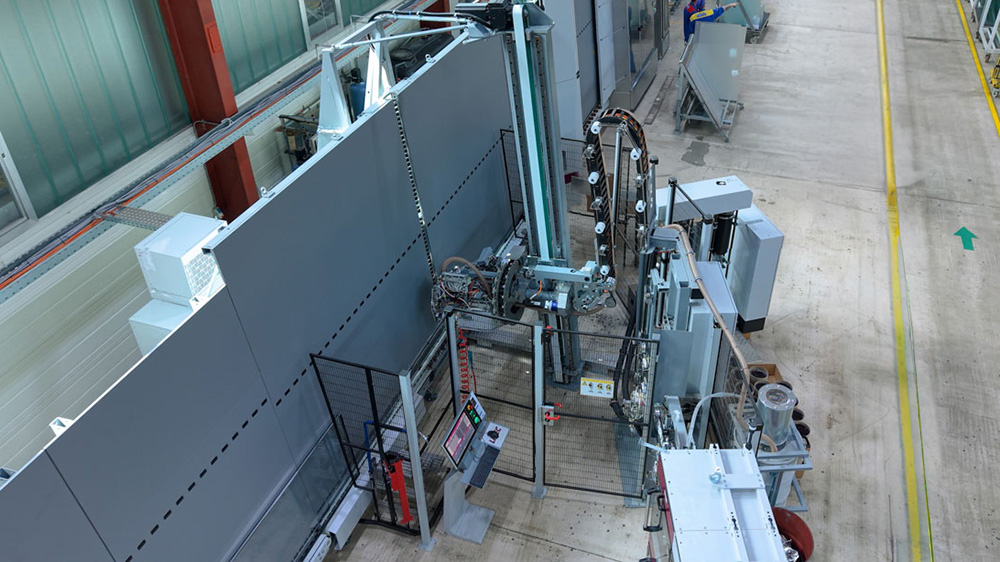
Processing flexible spacer material requires maximum precision. The material is fed from the coil and must be guided, punched, and applied precisely throughout the entire process. In practice, several challenges have emerged: inaccurate application, inconsistent butyl application, time-consuming changeovers, and limited flexibility across different spacer types. The solution? The new FSA-A from LiSEC.
## **Where do FLEXIBLE SPACERs SHOW their STRENGTHS?**
Flexible spacers are particularly advantageous wherever function, design, and stability all play an important role:
- Large façade elements
- Applications with high optical requirements
- Constructions with increased inherent stability
Thanks to precise processing with the FSA-A, these advantages can now be realised much more easily and with greater process reliability. The goal was to consistently address existing challenges and create a system that impresses both technically and in daily operation. This involved not just minor adjustments, but a comprehensive redesign of nearly all relevant modules.
### **KEY IMPROVEMENTS AT A GLANCE**
###### 1. PRECISE BUTYL APPLICATION
Instead of relying on pressure systems as before, dosing is now carried out via a gear pump. This allows the butyl application to be controlled volumetrically with high accuracy. The result is a consistent and clean application, which not only improves gas tightness but also reduces contamination within the machine. At the same time, the precise start and stop behaviour ensures a significantly more uniform visual appearance.
2. OPTIMISED PUNCHING QUALITY
The quality of punching plays a crucial role, particularly at the corners. This is where it becomes evident whether a finished element appears clean and high-quality. Improvements in punching technology result in clearly defined geometries, delivering both technical and visual benefits—especially in demanding façade applications.
###### 3. STABLE AND PRECISE MATERIAL TRANSPORT
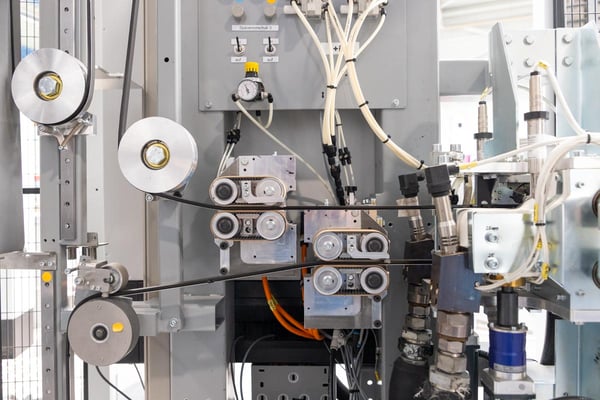
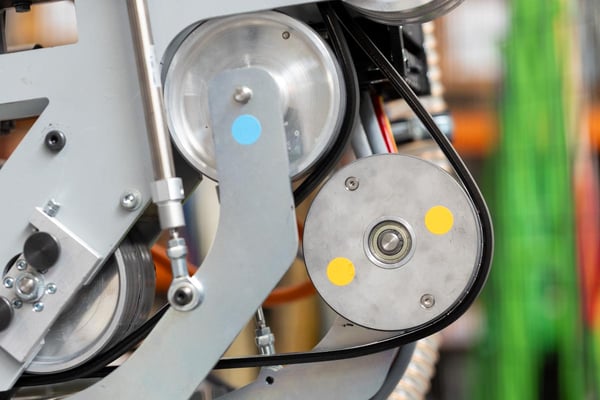
In addition to the processing itself, the material flow within the system has also been redesigned. The transport of the flexible spacer to the application is now performed via a caterpillar feed, ensuring full-surface guidance of the material. This stabilises movement and enables significantly more precise positioning. Combined with integrated length compensation, consistent high quality is ensured even in dynamic processes and at high cycle rates.
|  |  |
| --- | --- |
| Spacer feed including length compensation | Length compensation before application head |
###### 4. SIGNIFICANTLY SIMPLIFIED CHANGEOVER
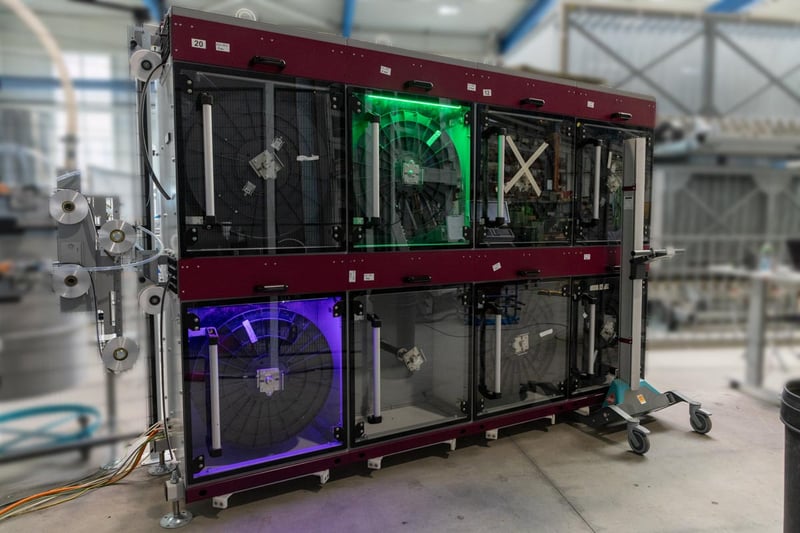
The new modular material magazine enables easy expansion to multiple spacer types while ensuring optimal climatic storage conditions. This maintains consistent material quality and allows the system to adapt to varying production requirements.
###### 5. EFFICIENT PRODUCTION THROUGH DOUBLE-LANE OPERATION
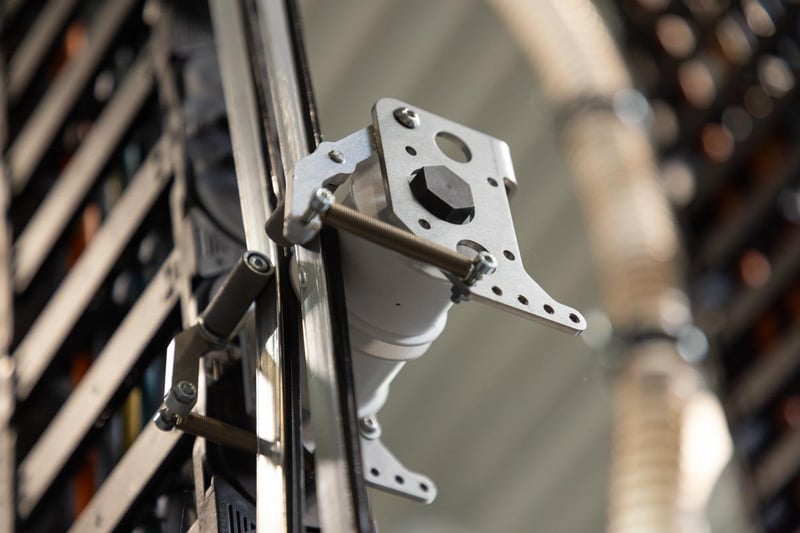
A particular advantage remains the dual-lane technology, which shows its strengths especially in more complex glass structures. Different spacer geometries can be processed without interruption, which is particularly relevant for triple glazing with varying distances. The process remains continuously efficient, without time loss due to changeovers.
###### 6. INTELLIGENT PROCESS MONITORING
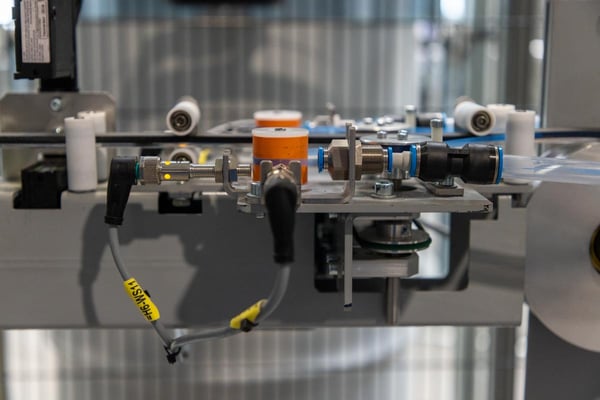
Protective films and punching residues are centrally collected and automatically removed, while monitoring ensures that processes such as film removal function correctly. This increases transparency and prevents typical disruptions during operation.
|  | 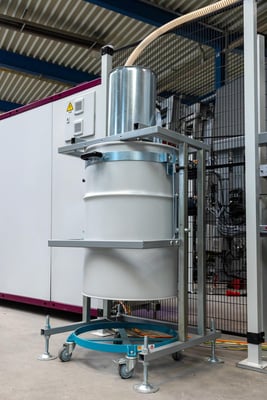 |
| --- | --- |
| Protective film extraction unit | Extraction unit |
###### 7. MAINTENANCE AND ACCESSIBILITY
The FSA-A has been designed so that key assemblies are significantly easier to access compared to previous generations. In particular, the butyl unit can be fully opened, allowing cleaning and service work to be carried out quickly and without cumbersome handling. This not only reduces maintenance time but also minimises downtime during operation.
### **AVAILABILITY & FURTHER INFORMATION**
The FSA-A is already available and successfully in use in initial applications. It has quickly proven itself in real production environments and is already being used for ongoing orders. [Further information and contact options can be found here.](https://www.lisec.com/about-lisec/contact)
### Summary
The FSA-A demonstrates how the processing of flexible spacer can be significantly simplified and improved through consistent further development. Precision, stability, and ease of use work hand in hand to deliver a process that excels both technically and in everyday operation.
[](https://www.facebook.com/lisecaustriagmbh/) [](https://at.linkedin.com/company/lisec-austria-gmbh) [](https://twitter.com/lisecgroup) [](mailto:info@lisec.com)
Subscribe
### Subscribe Via Email

##### Leave a comment
### Recommended Posts
[](https://blog.lisec.com/ftc-c?hsLang=en)
### [Greater efficiency, less risk: How the FTC-C makes Foil cutting easier](https://blog.lisec.com/ftc-c?hsLang=en)
Foil cutting is a challenge in laminated glass production. Manual cutting of the foil not only...
[](https://blog.lisec.com/flat-glass-faster?hsLang=en)
### [FLAT GLASS CAN BE PROCESSED FASTER WITH FEWER RESOURCES](https://blog.lisec.com/flat-glass-faster?hsLang=en)
There is a real alternative to the traditional production and processing of flat glass in...
[](https://blog.lisec.com/lisec-splitfin-the-two-towers?hsLang=en)
### [LiSEC SplitFin – The two towers!](https://blog.lisec.com/lisec-splitfin-the-two-towers?hsLang=en)
LiSEC has stood for quality glass processing with peripheral wheels for over 20 years now....
#### I would like to receive information on new LiSEC products and services
Register now
##### About LiSEC
- [Locations & Contact](https://www.lisec.com/about-lisec/locations-contact/)
- [Company](https://www.lisec.com/about-lisec/company/)
- [Purchasing](https://www.lisec.com/about-lisec/purchasing/)
- [Careers](https://www.lisec.com/careers/working-at-lisec/)
- [Glass Forum](https://www.lisec.com/glass-processing/glass-forum/)
- [CE Declaration of Performance](https://www.lisec.com/glass-processing/ce-declaration-of-performance/)
##### Service
- [Training](https://www.lisec.com/service/training/)
- [FAQ](https://www.lisec.com/service/faq/)
- [Testing & Competence Center](https://www.lisec.com/service/training-service-center/)
- [My LiSEC](https://www.lisec.com/service/my-lisec/)
##### News
- [News](https://www.lisec.com/news/news/)
- [Events](https://www.lisec.com/news/events/)
- [Customer Magazine LEAD](https://www.lisec.com/news/customer-magazine-lead/)
- [Downloads](https://www.lisec.com/footer/news/downloads/)
- [Press contact](https://www.lisec.com/news/press-contact/)
##### Follow us
-
-
-
-
- [](https://www.karriere.at/b/lisec-austria#content)
- [](https://x.com/lisecgroup/)
- Copyright © 2023 LiSEC
- [Imprint](https://www.lisec.com/meta/imprint/)
- [Privacy Policy](https://www.lisec.com/meta/privacy-policy/)
- [Cookie Policy](https://www.lisec.com/meta/cookie-policy/)
#### best in glass processing
Settings for cookies and third-party applications
Cookies and third-party applications are used on our website. This helps us to guarantee the best possible performance of our website, especially
- the constant improvement of the functionality of our website (analysis of the user visit),
- a smooth experience when using the website or
- the placement of suitable advertising for users on certain platforms.
Do you consent to the use of cookies and the processing of personal data associated therewith?
Further information
Yes, I agree
Required These cookies ensure the basic functions of our website. This enables preferred settings to be made available to you again when you revisit the website. These include country and language settings. They also help to ensure the safe use of our website.
Functional We can analyse the use of our website using these cookies. They help us to constantly improve the functionality of our website.
Save
You can find more information on the use of cookies and opt-out options in our privacy statement.
You can amend your cookie settings at any time using the cookie settings link in the page footer. Please refer to our extensive [privacy statement](https://blog.lisec.com/meta/privacy-policy/?hsLang=en) for more information.
### LISEC NEWSLETTER SERVICE
[JETZT REGISTRIEREN](https://www.lisec.com/contact/data-verfication/?tx_form_formframework%5Baction%5D=perform&tx_theme_pi3%5Bcontroller%5D=RegistrationForm&cHash=78457fd789ddb12b5b2b33799e53eade)
### Follow us on:
-
-
-
-
-
-
- [](https://www.karriere.at/b/lisec-austria#content)
### ABOUT LISEC
- [Locations & Contact](https://www.lisec.com/about-lisec/contact)
- [Company](https://www.lisec.com/about-lisec/company/)
- [Purchasing](https://www.lisec.com/about-lisec/purchasing/)
- [Careers](https://www.lisec.com/careers/working-at-lisec/)
- [CE Declaration of Performance](https://www.lisec.com/competence/process-development/ce-declaration-of-performance)
### Service
- [Training](https://www.lisec.com/competence/after-sale-service/training/)
- [FAQ](https://www.lisec.com/competence/after-sale-service/faq/)
- [My LiSEC](https://www.lisec.com/competence/after-sale-service/mylisec)
### News & Aktuelles
- [News](https://www.lisec.com/news/news/)
- [Events](https://www.lisec.com/news/news/)
- [Downloads](https://www.lisec.com/footer/news/downloads/)
- [Press Contact](https://www.lisec.com/news/press-contact/)
- COPYRIGHT © 2024 LiSEC
- [IMPRINT](https://www.lisec.com/meta/imprint/)
- [PRIVACY POLICY](https://www.lisec.com/menus/meta/privacy-policy)
- [COOKIE POLICY](https://www.lisec.com/menus/meta/cookie-policy)
- [TRANSPARENCY LINE](https://hub.lisec.com/whistleblowing)
- [COOKIE SETTINGS](https://www.lisec.com/menus/meta/cookie-policy)
all.in.one:solutions
[](https://www.lisec.com/)