---
title: Efficient solutions for edge Decoating during float glass cutting
description: LiSEC’s DSC cutting technology delivers precise cutting, reliable processing of complex coatings, and minimized maintenance effort.
image: https://blog.lisec.com/hubfs/DSC-A_0001_web.jpg
---
- [BLOG](https://blog.lisec.com/)
- [CONTACT](https://www.lisec.com/about-lisec/contact)
- [DOWNLOADS](https://www.lisec.com/news/downloads)
- [Hotline & ONLINESUPPORT](https://www.lisec.com/competence/after-sale-service/hotline-online-support)
- [SUCCESS STORIES](https://www.lisec.com/news/success-stories-1)
- [](https://www.lisec.com/contact/)
- [](https://business-portal.lisec.com/signin.php)
- 
### CHOOSE YOUR LANGUAGE
- [English](https://blog.lisec.com/dsc-float-cut)
- [Deutsch](https://blog.lisec.com/de/dsc-float-cut)
- SOLUTIONS
- Systems & Lines
- [Glass Cutting Line](https://www.lisec.com/solutions/systems-lines#collapse-42)
- [Insulating glass line](https://www.lisec.com/solutions/systems-lines#collapse-911)
- [Glass Processing Line](https://www.lisec.com/solutions/systems-lines#collapse-43)
- [Laminated Glass Line](https://www.lisec.com/solutions/systems-lines#collapse-199)
- [Individual Machines](https://www.lisec.com/solutions/individual-machines)
- [Glass Cutting](https://www.lisec.com/solutions/individual-machines#collapse-34)
- [Insulating Glass Production](https://www.lisec.com/solutions/individual-machines#collapse-34)
- [Sorting & Logistics Systems](https://www.lisec.com/solutions/individual-machines#collapse-44)
- [Flat Glass Processing](https://www.lisec.com/solutions/individual-machines#collapse-36)
- [Glass Processing & Wash](https://www.lisec.com/solutions/individual-machines#collapse-219)
- [Quality management](https://www.lisec.com/solutions/individual-machines#collapse-46)
- [Tempering](https://www.lisec.com/solutions/individual-machines#collapse-46)
- [base](https://www.lisec.com/solutions/individual-machines#collapse-38)
- [Success Stories](https://www.lisec.com/solutions/individual-machines#collapse-209)
- [Software](https://www.lisec.com/solutions/software)
- [Software for Business Management](https://www.lisec.com/solutions/software/#collapse-82)
- [Software for Production Management](https://www.lisec.com/solutions/software/#collapse-120)
- [Software for Shopfloor Management](https://www.lisec.com/solutions/software/#collapse-123)
- [Software on machines](https://www.lisec.com/solutions/software/#collapse-124)
- [Preowned machines](https://www.lisec.com/solutions/preowned-machines/)
- COMPETENCE
- [AFTER SALES / SERVICES](https://www.lisec.com/competence/after-sale-service/)
- [HOTLiNE & ONLiNE SUPPORT](https://www.lisec.com/competence/after-sale-service/hotline-online-support/)
- [LiSEC Process Control](https://www.lisec.com/competence/after-sale-service/lisec-process-control/)
- [Live Support System - LiSEC.eye](https://www.lisec.com/competence/after-sale-service/live-support-system-liseceye/)
- [LiSERV](https://www.lisec.com/competence/after-sale-service/liserv/)
- [My LiSEC](https://www.lisec.com/competence/after-sale-service/my-lisec/)
- [Spare Parts](https://www.lisec.com/competence/after-sale-service/spare-parts/)
- [LiSAIR Express Delivery](https://www.lisec.com/competence/after-sale-service/lisair-express-delivery/)
- [Contacts spare parts service](https://www.lisec.com/competence/after-sale-service/contacts-spare-parts-service/)
- [Inspection and Maintenance](https://www.lisec.com/competence/after-sale-service/inspection-and-maintenance/)
- [Installation](https://www.lisec.com/competence/after-sale-service/installation/)
- [LONGLiFE](https://www.lisec.com/competence/after-sale-service/longlife/)
- [Training](https://www.lisec.com/competence/after-sale-service/training/)
- [FAQ](https://www.lisec.com/competence/after-sale-service/faq/)
- [PROCESS DEVELOPMENT](https://www.lisec.com/competence/process-development/products)
- [Products](https://www.lisec.com/competence/process-development/products)
- [References](https://www.lisec.com/competence/process-development/references#?)
- [Contact](https://www.lisec.com/competence/process-development/contact/glastech-produktions-und-verfahrenstechnik-gmbh)
- [CE Declaration of Performance](https://www.lisec.com/competence/process-development/contact/glastech-produktions-und-verfahrenstechnik-gmbh)
- [GLASTECH](https://www.lisec.com/competence/process-development/glastech)
- [GLASTECH CERTIFICATE](https://www.lisec.com/footer/news/downloads/#?category=750&subcategory=751)
- [SPACER](https://www.lisec.com/footer/news/downloads/#?category=750&subcategory=751)
- [PRODUCTS](https://www.lisec.com/competence/spacer/products)
- CAREERS
- [Working At LiSEC](https://www.lisec.com/careers/working-at-lisec)
- [Apprenticship At LiSEC](https://www.lisec.com/careers/apprenticeship-at-lisec)
- [A Day At LiSEC](https://www.lisec.com/careers/a-day-at-lisec)
- [Online Application](https://lisec.bewerberportal.at/Jobs)
- [Carrer Fairs](https://www.lisec.com/careers/career-fairs)
- [Contact](https://www.lisec.com/careers/contact/austria/)
- NEWS
- [News](https://www.lisec.com/news/news)
- [Success Stories](https://www.lisec.com/news/success-stories-1)
- [Events](https://www.lisec.com/news/events/)
- [Press Contact](https://www.lisec.com/news/press-contact/)
- [Press Distributor](https://www.lisec.com/news/press-distributor/)
- [Downloads](https://www.lisec.com/footer/news/downloads/)
- ABOUT LISEC
- [Company](https://www.lisec.com/about-lisec/company/)
- [Management](https://www.lisec.com/about-lisec/management/)
- [History](https://www.lisec.com/about-lisec/history/)
- [Purchasing](https://www.lisec.com/about-lisec/purchasing)
- [Contact](https://www.lisec.com/about-lisec/contact)
[](https://www.lisec.com/)
- [Systems & Lines](https://www.lisec.com/de/loesungen/systemloesungen-linien/)
- [Glass Cutting Line](https://www.lisec.com/solutions/systems-lines/#collapse-42)
- [](https://www.lisec.com/solutions/systems-lines/#collapse-42)
- [Insulating glass line](https://www.lisec.com/solutions/systems-lines/#collapse-911)
- [](https://www.lisec.com/solutions/systems-lines/#collapse-911)
- [Glass Processing Line](https://www.lisec.com/solutions/systems-lines/#collapse-43)
- [](https://www.lisec.com/solutions/systems-lines/#collapse-43)
- [Laminated Glass Line](https://www.lisec.com/solutions/systems-lines/#collapse-199)
- 
- [Individual Machines](https://www.lisec.com/solutions/individual-machines)
- [Glass Cutting](https://www.lisec.com/solutions/individual-machines#collapse-34)
- [](https://www.lisec.com/solutions/stand-alone-machines/#collapse-34)
- [Insulating Glass Production](https://www.lisec.com/solutions/individual-machines#collapse-34)
- [](https://www.lisec.com/solutions/stand-alone-machines/#collapse-34)
- [Sorting & Logistics Systems](https://www.lisec.com/solutions/individual-machines#collapse-44)
- [](https://www.lisec.com/solutions/stand-alone-machines/#collapse-44)
- [Flat Glass Processing](https://www.lisec.com/solutions/individual-machines#collapse-36)
- [](https://www.lisec.com/solutions/stand-alone-machines/#collapse-36)
- [Glass Processing & Wash](https://www.lisec.com/solutions/individual-machines#collapse-219)
- [](https://www.lisec.com/solutions/stand-alone-machines/#collapse-219)
- [Quality management](https://www.lisec.com/solutions/individual-machines#collapse-46)
- [](https://www.lisec.com/solutions/stand-alone-machines/#collapse-46)
- [Tempering](https://www.lisec.com/solutions/individual-machines#collapse-46)
- [](https://www.lisec.com/solutions/stand-alone-machines/#collapse-46)
- [base](https://www.lisec.com/solutions/individual-machines#collapse-38)
- [](https://www.lisec.com/solutions/stand-alone-machines/#collapse-38)
- [Success Stories](https://www.lisec.com/solutions/individual-machines#collapse-209)
- [](https://www.lisec.com/solutions/stand-alone-machines/#collapse-209)
- [Software](https://www.lisec.com/solutions/software/)
- [Software for Business Management](https://www.lisec.com/solutions/software/#collapse-82)
- [](https://www.lisec.com/solutions/software/#collapse-82)
- [Software for Production Management](https://www.lisec.com/solutions/software/#collapse-120)
- [](https://www.lisec.com/solutions/software/#collapse-120)
- [Software for Shopfloor Management](https://www.lisec.com/solutions/software/#collapse-123)
- [](https://www.lisec.com/solutions/software/#collapse-123)
- [Software on machines](https://www.lisec.com/solutions/software/#collapse-124)
- [](https://www.lisec.com/solutions/software/#collapse-124)
- [Configurator](https://www.lisec.com/solutions/configurator/)
-
-
-
- [Preowned machines](https://www.lisec.com/solutions/preowned-machines/)
-
-
-
- [After Sale / Service](https://www.lisec.com/competence/after-sale-service/)
- [HOTLiNE & ONLiNE SUPPORT](https://www.lisec.com/competence/after-sale-service/hotline-online-support/)
- [](https://www.lisec.com/competence/after-sale-service/hotline-online-support/)
- [LiSEC Process Control](https://www.lisec.com/competence/after-sale-service/lisec-process-control/)
- [](https://www.lisec.com/competence/after-sale-service/lisec-process-control/)
- [Live Support System - LiSEC.eye](https://www.lisec.com/competence/after-sale-service/live-support-system-liseceye/)
- [](https://www.lisec.com/competence/after-sale-service/live-support-system-liseceye/)
- [LiSERV](https://www.lisec.com/competence/after-sale-service/liserv/)
- [](https://www.lisec.com/competence/after-sale-service/liserv/)
- [My LiSEC](https://www.lisec.com/competence/after-sale-service/my-lisec/)
- [](https://www.lisec.com/competence/after-sale-service/my-lisec/)
- [Spare Parts](https://www.lisec.com/competence/after-sale-service/spare-parts/)
- [](https://www.lisec.com/competence/after-sale-service/spare-parts/)
- [LiSAIR Express Delivery](https://www.lisec.com/competence/after-sale-service/lisair-express-delivery/)
- [](https://www.lisec.com/competence/after-sale-service/lisair-express-delivery/)
- [Contacts spare parts service](https://www.lisec.com/competence/after-sale-service/contacts-spare-parts-service/)
- [](https://www.lisec.com/competence/after-sale-service/contacts-spare-parts-service/)
- [Inspection and Maintenance](https://www.lisec.com/competence/after-sale-service/inspection-and-maintenance/)
- [](https://www.lisec.com/competence/after-sale-service/inspection-and-maintenance/)
- [Installation](https://www.lisec.com/competence/after-sale-service/installation/)
- [](https://www.lisec.com/competence/after-sale-service/installation/)
- [LONGLiFE](https://www.lisec.com/competence/after-sale-service/longlife/)
- [](https://www.lisec.com/competence/after-sale-service/longlife/)
- [Training](https://www.lisec.com/competence/after-sale-service/training/)
- 
- [FAQ](https://www.lisec.com/competence/after-sale-service/faq/)
- [](https://www.lisec.com/competence/after-sale-service/faq/)
- [Glass Processing](https://www.lisec.com/competence/glass-processing/products/)
- [Product](https://www.lisec.com/competence/glass-processing/products/)
- [](https://www.lisec.com/competence/glass-processing/products/)
- [References](https://www.lisec.com/competence/glass-processing/references/)
- [](https://www.lisec.com/competence/glass-processing/references/)
- [Contact](https://www.lisec.com/competence/glass-processing/contact/glastech-produktions-und-verfahrenstechnik-gmbh/)
- [](https://www.lisec.com/competence/glass-processing/contact/glastech-produktions-und-verfahrenstechnik-gmbh/)
- [CE Declaration of Performance](https://www.lisec.com/competence/glass-processing/ce-declaration-of-performance/)
- [](https://www.lisec.com/competence/glass-processing/ce-declaration-of-performance/)
- [GLASTECH](https://www.lisec.com/competence/glass-processing/glastech/)
- [](https://www.lisec.com/competence/glass-processing/glastech/)
- [Glastech Certificate](https://www.lisec.com/footer/news/downloads/#?category=750&subcategory=751)
-
-
- [SPACER](https://www.lisec.com/competence/spacer/products/)
- [PRODUCTS](https://www.lisec.com/competence/spacer/products/)
- [](https://www.lisec.com/competence/spacer/products/)
- [Working at LiSEC](https://www.lisec.com/careers/working-at-lisec/)
- [Online Application](https://lisec.bewerberportal.at/Register?culture=en)
-
-
-
- [Contact](https://www.lisec.com/careers/contact/austria/)
-
-
-
- [News](https://www.lisec.com/news/news/)
- [Success Stories](https://www.lisec.com/news/success-stories/)
-
-
-
- [Events](https://www.lisec.com/news/events/)
-
-
-
- [Customer Magazine LEAD](https://www.lisec.com/news/customer-magazine-lead/)
-
-
-
- [Press Contact](https://www.lisec.com/news/press-contact/)
-
-
-
- [Press Distributor](https://www.lisec.com/news/press-distributor/)
-
-
-
- [Downloads](https://www.lisec.com/footer/news/downloads/)
-
-
-
- [Company](https://www.lisec.com/about-lisec/company/)
- [Management](https://www.lisec.com/about-lisec/management/)
-
-
-
- [Purchasing](https://www.lisec.com/about-lisec/purchasing/)
-
-
-
- [Locations & Contact](https://www.lisec.com/about-lisec/locations-contact/)
-
-
-
- [History](https://www.lisec.com/about-lisec/history/)
-
-
-
### Categories
- [Glass Processing (20)](https://blog.lisec.com/tag/glass-processing)
- [Glass Cutting (16)](https://blog.lisec.com/tag/glass-cutting)
- [Laminated Glass Production (16)](https://blog.lisec.com/tag/laminated-glass-production)
- [Insulating Glass Production (12)](https://blog.lisec.com/tag/insulating-glass-production)
- [Glass Logistics (8)](https://blog.lisec.com/tag/glass-logistics)
- [Longlife (7)](https://blog.lisec.com/tag/longlife)
- [Service (6)](https://blog.lisec.com/tag/service)
- [Software (6)](https://blog.lisec.com/tag/software)
- [Podcast (2)](https://blog.lisec.com/tag/podcast)
# Efficient solutions for edge Decoating during float glass cutting
Posted by
Sarah Hummelsberger on Dec 11, 2025, 1:45:26 PM

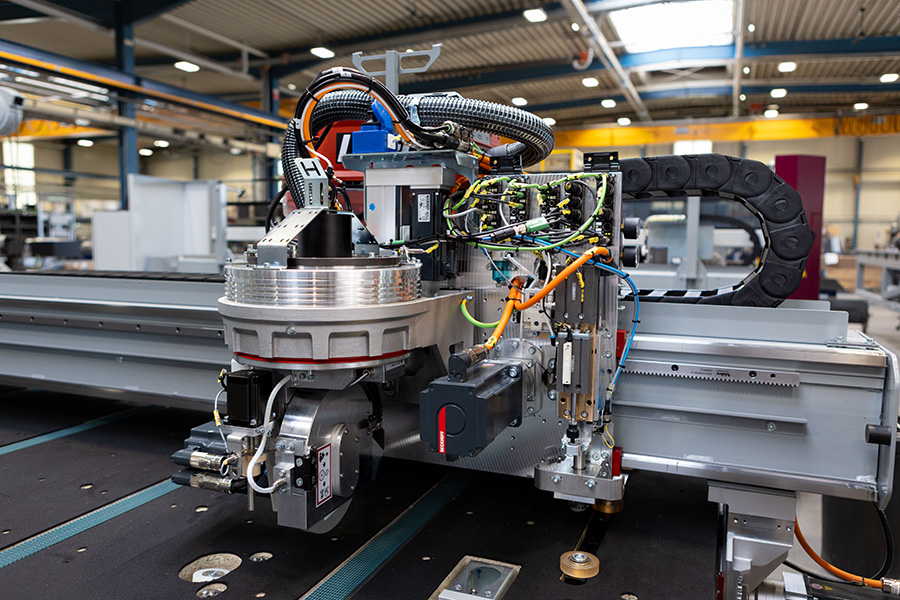
Float glass cutting may sound straightforward, but it plays a decisive role in ensuring quality, efficiency, and safety throughout subsequent glass production processes. With its DSC cutting technology, LiSEC delivers a solution that not only automatically selects the optimal parameters but also reliably removes complex heat and solar control coatings - perfect for anyone looking to maximize production performance.
## Where Are the Challenges in Float Glass Cutting?
In glass processing, cutting float glass is a critical step with several challenges:
- **Quality variations** in raw glass affecting edge strength and process stability during breakout.
- **Production bottlenecks** during peak periods when existing systems cannot deliver sufficient throughput.
- **Uncertainty with new coatings** - Can current edge-decoating technology handle them quickly and reliably?
- **Lack of process control** over cutting parameters, leading to quality losses.
## The Technological Solution
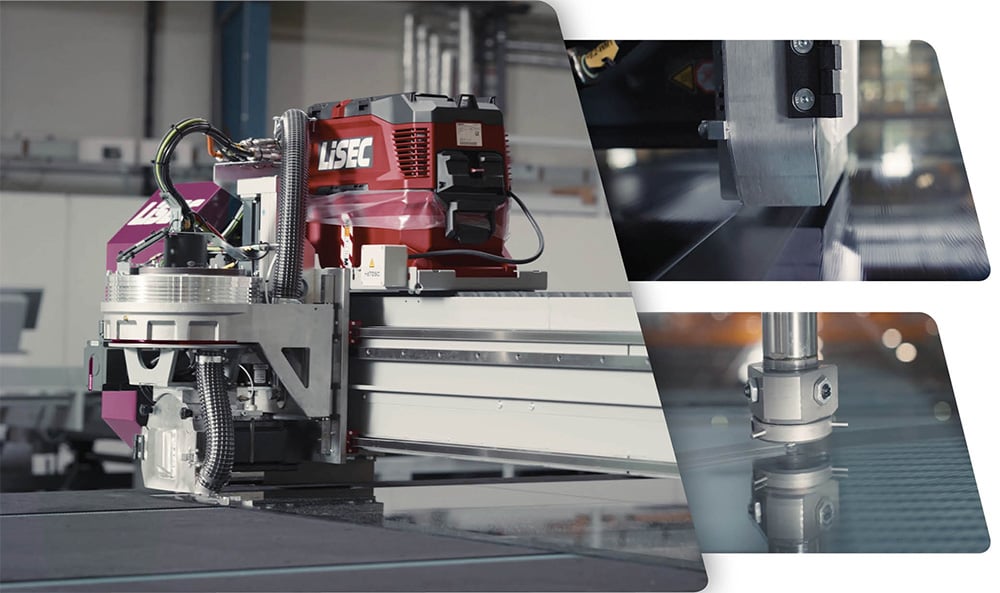
LiSEC’s DSC cutting technology is an advanced solution designed to address these challenges.
- Automatic tool and parameter selection based on glass type ensures consistently high quality.
- Integrated central lubrication minimizes maintenance effort and maximizes system availability.
- Edge-decoating technology with [LiTEC Temperature Control](https://blog.lisec.com/de/litech_temperature_control?hsLang=en) provides precise process monitoring, enabling efficient removal of even complex coatings.
- Direct cutting technology eliminates mechanical components between the cutting head and wheel, guaranteeing maximum precision.
### How Does the DSC Cutting Table Work?
The DSC system automatically detects the glass type and selects:
- The appropriate cutting wheel
- Optimal cutting pressure
- Correct speed and acceleration
It achieves speeds of up to **160 m/min** for both edge-decoating and cutting—whether dealing with simple or complex coatings. The process is continuously monitored:
- Micro-chipping is minimized
- Cutting fluid and tool condition are automatically controlled
- Overheating and abrasive residue are prevented
- Real-time feedback keeps operators informed
### Edge Decoating in Practice
|  |  |
| --- | --- |
| The hydrophobic surface protection coating has been completely removed from the right edge of the glass. | The temporary surface protection film has been completely removed from the right edge of the glass. |
The edge decoating is carried out at high speed and with precision – even for special coatings such as solar control or thermal insulation glass, all in a single processing step.
- 160 m/min for standard solar/thermal coatings
- 112 m/min for EASYPRO protective coatings
- 40 m/min for TPF protective coatings
### Fast and Safe Decoating with LiTEC Temperature Control:
## The Advantages
- **Process reliability:** Automated control and real-time monitoring ensure consistent quality.
- **Flexibility:** Handles complex coatings without compromising speed or quality.
- **Cost efficiency:** Fewer machines, higher output—ideal for peak production and long-term efficiency.
This solution is perfect for glass processors aiming for top cutting quality with minimal waste. Production managers benefit from improved system utilization and reduced maintenance, while technicians working with new coatings gain a secure, reliable process foundation. LiSEC also offers hands-on workshops on cutting technology and edge decoating.
## Summary
Modern float glass cutting demands quality, speed, and flexibility. LiSEC’s DSC cutting technology delivers all three, providing precise cutting, reliable processing of complex coatings, and minimized maintenance effort.
[](https://www.facebook.com/lisecaustriagmbh/) [](https://at.linkedin.com/company/lisec-austria-gmbh) [](https://twitter.com/lisecgroup) [](mailto:info@lisec.com)
Subscribe
### Subscribe Via Email

##### Leave a comment
### Recommended Posts
[](https://blog.lisec.com/vsl-a_advantages-cutting-laminated-glass?hsLang=en)
### [The LiSEC VSL-A – The triple A of advantages for cutting laminated glass](https://blog.lisec.com/vsl-a_advantages-cutting-laminated-glass?hsLang=en)
Since the beginning of the 1990s, LiSEC has been actively shaping the cutting possibilities of...
[](https://blog.lisec.com/vsl-a/dlb?hsLang=en)
### [Dynamic Load Balancing: The Key to Efficient Lami Cutting](https://blog.lisec.com/vsl-a/dlb?hsLang=en)
How many cutting bridges do you need for the fastest laminated glass cutting? LiSEC says two - but...
[](https://blog.lisec.com/sir-lami?hsLang=en)
### [Perfect Lami edge cutting without heat stress?](https://blog.lisec.com/sir-lami?hsLang=en)
Spontaneous breakage, splintering, pronounced over- and undercuts: The rising use of laminated...
#### I would like to receive information on new LiSEC products and services
Register now
##### About LiSEC
- [Locations & Contact](https://www.lisec.com/about-lisec/locations-contact/)
- [Company](https://www.lisec.com/about-lisec/company/)
- [Purchasing](https://www.lisec.com/about-lisec/purchasing/)
- [Careers](https://www.lisec.com/careers/working-at-lisec/)
- [Glass Forum](https://www.lisec.com/glass-processing/glass-forum/)
- [CE Declaration of Performance](https://www.lisec.com/glass-processing/ce-declaration-of-performance/)
##### Service
- [Training](https://www.lisec.com/service/training/)
- [FAQ](https://www.lisec.com/service/faq/)
- [Testing & Competence Center](https://www.lisec.com/service/training-service-center/)
- [My LiSEC](https://www.lisec.com/service/my-lisec/)
##### News
- [News](https://www.lisec.com/news/news/)
- [Events](https://www.lisec.com/news/events/)
- [Customer Magazine LEAD](https://www.lisec.com/news/customer-magazine-lead/)
- [Downloads](https://www.lisec.com/footer/news/downloads/)
- [Press contact](https://www.lisec.com/news/press-contact/)
##### Follow us
-
-
-
-
- [](https://www.karriere.at/b/lisec-austria#content)
- [](https://x.com/lisecgroup/)
- Copyright © 2023 LiSEC
- [Imprint](https://www.lisec.com/meta/imprint/)
- [Privacy Policy](https://www.lisec.com/meta/privacy-policy/)
- [Cookie Policy](https://www.lisec.com/meta/cookie-policy/)
#### best in glass processing
Settings for cookies and third-party applications
Cookies and third-party applications are used on our website. This helps us to guarantee the best possible performance of our website, especially
- the constant improvement of the functionality of our website (analysis of the user visit),
- a smooth experience when using the website or
- the placement of suitable advertising for users on certain platforms.
Do you consent to the use of cookies and the processing of personal data associated therewith?
Further information
Yes, I agree
Required These cookies ensure the basic functions of our website. This enables preferred settings to be made available to you again when you revisit the website. These include country and language settings. They also help to ensure the safe use of our website.
Functional We can analyse the use of our website using these cookies. They help us to constantly improve the functionality of our website.
Save
You can find more information on the use of cookies and opt-out options in our privacy statement.
You can amend your cookie settings at any time using the cookie settings link in the page footer. Please refer to our extensive [privacy statement](https://blog.lisec.com/meta/privacy-policy/?hsLang=en) for more information.
### LISEC NEWSLETTER SERVICE
[JETZT REGISTRIEREN](https://www.lisec.com/contact/data-verfication/?tx_form_formframework%5Baction%5D=perform&tx_theme_pi3%5Bcontroller%5D=RegistrationForm&cHash=78457fd789ddb12b5b2b33799e53eade)
### Follow us on:
-
-
-
-
-
-
- [](https://www.karriere.at/b/lisec-austria#content)
### ABOUT LISEC
- [Locations & Contact](https://www.lisec.com/about-lisec/contact)
- [Company](https://www.lisec.com/about-lisec/company/)
- [Purchasing](https://www.lisec.com/about-lisec/purchasing/)
- [Careers](https://www.lisec.com/careers/working-at-lisec/)
- [CE Declaration of Performance](https://www.lisec.com/competence/process-development/ce-declaration-of-performance)
### Service
- [Training](https://www.lisec.com/competence/after-sale-service/training/)
- [FAQ](https://www.lisec.com/competence/after-sale-service/faq/)
- [My LiSEC](https://www.lisec.com/competence/after-sale-service/mylisec)
### News & Aktuelles
- [News](https://www.lisec.com/news/news/)
- [Events](https://www.lisec.com/news/news/)
- [Downloads](https://www.lisec.com/footer/news/downloads/)
- [Press Contact](https://www.lisec.com/news/press-contact/)
- COPYRIGHT © 2024 LiSEC
- [IMPRINT](https://www.lisec.com/meta/imprint/)
- [PRIVACY POLICY](https://www.lisec.com/menus/meta/privacy-policy)
- [COOKIE POLICY](https://www.lisec.com/menus/meta/cookie-policy)
- [TRANSPARENCY LINE](https://hub.lisec.com/whistleblowing)
- [COOKIE SETTINGS](https://www.lisec.com/menus/meta/cookie-policy)
all.in.one:solutions
[](https://www.lisec.com/)