---
title: "Insulating Glass with Added Value: Thermal Insulation and Acoustics"
description: Isolierglas verbessert Energieeffizienz und Wohnkomfort durch thermische und akustische Isolation. Erfahren Sie mehr über seine Herstellung und die Bedeutung von Abstandhaltern und Edelgasfüllungen.
image: https://blog.lisec.com/hubfs/product4_picture2_lisec_rhf-a.jpg
---
- [BLOG](https://blog.lisec.com/)
- [CONTACT](https://www.lisec.com/about-lisec/contact)
- [DOWNLOADS](https://www.lisec.com/news/downloads)
- [Hotline & ONLINESUPPORT](https://www.lisec.com/competence/after-sale-service/hotline-online-support)
- [SUCCESS STORIES](https://www.lisec.com/news/success-stories-1)
- [](https://www.lisec.com/contact/)
- [](https://business-portal.lisec.com/signin.php)
- 
### CHOOSE YOUR LANGUAGE
- [English](https://blog.lisec.com/ig-production)
- [Deutsch](https://blog.lisec.com/de/ig-production)
- SOLUTIONS
- Systems & Lines
- [Glass Cutting Line](https://www.lisec.com/solutions/systems-lines#collapse-42)
- [Insulating glass line](https://www.lisec.com/solutions/systems-lines#collapse-911)
- [Glass Processing Line](https://www.lisec.com/solutions/systems-lines#collapse-43)
- [Laminated Glass Line](https://www.lisec.com/solutions/systems-lines#collapse-199)
- [Individual Machines](https://www.lisec.com/solutions/individual-machines)
- [Glass Cutting](https://www.lisec.com/solutions/individual-machines#collapse-34)
- [Insulating Glass Production](https://www.lisec.com/solutions/individual-machines#collapse-34)
- [Sorting & Logistics Systems](https://www.lisec.com/solutions/individual-machines#collapse-44)
- [Flat Glass Processing](https://www.lisec.com/solutions/individual-machines#collapse-36)
- [Glass Processing & Wash](https://www.lisec.com/solutions/individual-machines#collapse-219)
- [Quality management](https://www.lisec.com/solutions/individual-machines#collapse-46)
- [Tempering](https://www.lisec.com/solutions/individual-machines#collapse-46)
- [base](https://www.lisec.com/solutions/individual-machines#collapse-38)
- [Success Stories](https://www.lisec.com/solutions/individual-machines#collapse-209)
- [Software](https://www.lisec.com/solutions/software)
- [Software for Business Management](https://www.lisec.com/solutions/software/#collapse-82)
- [Software for Production Management](https://www.lisec.com/solutions/software/#collapse-120)
- [Software for Shopfloor Management](https://www.lisec.com/solutions/software/#collapse-123)
- [Software on machines](https://www.lisec.com/solutions/software/#collapse-124)
- [Preowned machines](https://www.lisec.com/solutions/preowned-machines/)
- COMPETENCE
- [AFTER SALES / SERVICES](https://www.lisec.com/competence/after-sale-service/)
- [HOTLiNE & ONLiNE SUPPORT](https://www.lisec.com/competence/after-sale-service/hotline-online-support/)
- [LiSEC Process Control](https://www.lisec.com/competence/after-sale-service/lisec-process-control/)
- [Live Support System - LiSEC.eye](https://www.lisec.com/competence/after-sale-service/live-support-system-liseceye/)
- [LiSERV](https://www.lisec.com/competence/after-sale-service/liserv/)
- [My LiSEC](https://www.lisec.com/competence/after-sale-service/my-lisec/)
- [Spare Parts](https://www.lisec.com/competence/after-sale-service/spare-parts/)
- [LiSAIR Express Delivery](https://www.lisec.com/competence/after-sale-service/lisair-express-delivery/)
- [Contacts spare parts service](https://www.lisec.com/competence/after-sale-service/contacts-spare-parts-service/)
- [Inspection and Maintenance](https://www.lisec.com/competence/after-sale-service/inspection-and-maintenance/)
- [Installation](https://www.lisec.com/competence/after-sale-service/installation/)
- [LONGLiFE](https://www.lisec.com/competence/after-sale-service/longlife/)
- [Training](https://www.lisec.com/competence/after-sale-service/training/)
- [FAQ](https://www.lisec.com/competence/after-sale-service/faq/)
- [PROCESS DEVELOPMENT](https://www.lisec.com/competence/process-development/products)
- [Products](https://www.lisec.com/competence/process-development/products)
- [References](https://www.lisec.com/competence/process-development/references#?)
- [Contact](https://www.lisec.com/competence/process-development/contact/glastech-produktions-und-verfahrenstechnik-gmbh)
- [CE Declaration of Performance](https://www.lisec.com/competence/process-development/contact/glastech-produktions-und-verfahrenstechnik-gmbh)
- [GLASTECH](https://www.lisec.com/competence/process-development/glastech)
- [GLASTECH CERTIFICATE](https://www.lisec.com/footer/news/downloads/#?category=750&subcategory=751)
- [SPACER](https://www.lisec.com/footer/news/downloads/#?category=750&subcategory=751)
- [PRODUCTS](https://www.lisec.com/competence/spacer/products)
- CAREERS
- [Working At LiSEC](https://www.lisec.com/careers/working-at-lisec)
- [Apprenticship At LiSEC](https://www.lisec.com/careers/apprenticeship-at-lisec)
- [A Day At LiSEC](https://www.lisec.com/careers/a-day-at-lisec)
- [Online Application](https://lisec.bewerberportal.at/Jobs)
- [Carrer Fairs](https://www.lisec.com/careers/career-fairs)
- [Contact](https://www.lisec.com/careers/contact/austria/)
- NEWS
- [News](https://www.lisec.com/news/news)
- [Success Stories](https://www.lisec.com/news/success-stories-1)
- [Events](https://www.lisec.com/news/events/)
- [Press Contact](https://www.lisec.com/news/press-contact/)
- [Press Distributor](https://www.lisec.com/news/press-distributor/)
- [Downloads](https://www.lisec.com/footer/news/downloads/)
- ABOUT LISEC
- [Company](https://www.lisec.com/about-lisec/company/)
- [Management](https://www.lisec.com/about-lisec/management/)
- [History](https://www.lisec.com/about-lisec/history/)
- [Purchasing](https://www.lisec.com/about-lisec/purchasing)
- [Contact](https://www.lisec.com/about-lisec/contact)
[](https://www.lisec.com/)
- [Systems & Lines](https://www.lisec.com/de/loesungen/systemloesungen-linien/)
- [Glass Cutting Line](https://www.lisec.com/solutions/systems-lines/#collapse-42)
- [](https://www.lisec.com/solutions/systems-lines/#collapse-42)
- [Insulating glass line](https://www.lisec.com/solutions/systems-lines/#collapse-911)
- [](https://www.lisec.com/solutions/systems-lines/#collapse-911)
- [Glass Processing Line](https://www.lisec.com/solutions/systems-lines/#collapse-43)
- [](https://www.lisec.com/solutions/systems-lines/#collapse-43)
- [Laminated Glass Line](https://www.lisec.com/solutions/systems-lines/#collapse-199)
- 
- [Individual Machines](https://www.lisec.com/solutions/individual-machines)
- [Glass Cutting](https://www.lisec.com/solutions/individual-machines#collapse-34)
- [](https://www.lisec.com/solutions/stand-alone-machines/#collapse-34)
- [Insulating Glass Production](https://www.lisec.com/solutions/individual-machines#collapse-34)
- [](https://www.lisec.com/solutions/stand-alone-machines/#collapse-34)
- [Sorting & Logistics Systems](https://www.lisec.com/solutions/individual-machines#collapse-44)
- [](https://www.lisec.com/solutions/stand-alone-machines/#collapse-44)
- [Flat Glass Processing](https://www.lisec.com/solutions/individual-machines#collapse-36)
- [](https://www.lisec.com/solutions/stand-alone-machines/#collapse-36)
- [Glass Processing & Wash](https://www.lisec.com/solutions/individual-machines#collapse-219)
- [](https://www.lisec.com/solutions/stand-alone-machines/#collapse-219)
- [Quality management](https://www.lisec.com/solutions/individual-machines#collapse-46)
- [](https://www.lisec.com/solutions/stand-alone-machines/#collapse-46)
- [Tempering](https://www.lisec.com/solutions/individual-machines#collapse-46)
- [](https://www.lisec.com/solutions/stand-alone-machines/#collapse-46)
- [base](https://www.lisec.com/solutions/individual-machines#collapse-38)
- [](https://www.lisec.com/solutions/stand-alone-machines/#collapse-38)
- [Success Stories](https://www.lisec.com/solutions/individual-machines#collapse-209)
- [](https://www.lisec.com/solutions/stand-alone-machines/#collapse-209)
- [Software](https://www.lisec.com/solutions/software/)
- [Software for Business Management](https://www.lisec.com/solutions/software/#collapse-82)
- [](https://www.lisec.com/solutions/software/#collapse-82)
- [Software for Production Management](https://www.lisec.com/solutions/software/#collapse-120)
- [](https://www.lisec.com/solutions/software/#collapse-120)
- [Software for Shopfloor Management](https://www.lisec.com/solutions/software/#collapse-123)
- [](https://www.lisec.com/solutions/software/#collapse-123)
- [Software on machines](https://www.lisec.com/solutions/software/#collapse-124)
- [](https://www.lisec.com/solutions/software/#collapse-124)
- [Configurator](https://www.lisec.com/solutions/configurator/)
-
-
-
- [Preowned machines](https://www.lisec.com/solutions/preowned-machines/)
-
-
-
- [After Sale / Service](https://www.lisec.com/competence/after-sale-service/)
- [HOTLiNE & ONLiNE SUPPORT](https://www.lisec.com/competence/after-sale-service/hotline-online-support/)
- [](https://www.lisec.com/competence/after-sale-service/hotline-online-support/)
- [LiSEC Process Control](https://www.lisec.com/competence/after-sale-service/lisec-process-control/)
- [](https://www.lisec.com/competence/after-sale-service/lisec-process-control/)
- [Live Support System - LiSEC.eye](https://www.lisec.com/competence/after-sale-service/live-support-system-liseceye/)
- [](https://www.lisec.com/competence/after-sale-service/live-support-system-liseceye/)
- [LiSERV](https://www.lisec.com/competence/after-sale-service/liserv/)
- [](https://www.lisec.com/competence/after-sale-service/liserv/)
- [My LiSEC](https://www.lisec.com/competence/after-sale-service/my-lisec/)
- [](https://www.lisec.com/competence/after-sale-service/my-lisec/)
- [Spare Parts](https://www.lisec.com/competence/after-sale-service/spare-parts/)
- [](https://www.lisec.com/competence/after-sale-service/spare-parts/)
- [LiSAIR Express Delivery](https://www.lisec.com/competence/after-sale-service/lisair-express-delivery/)
- [](https://www.lisec.com/competence/after-sale-service/lisair-express-delivery/)
- [Contacts spare parts service](https://www.lisec.com/competence/after-sale-service/contacts-spare-parts-service/)
- [](https://www.lisec.com/competence/after-sale-service/contacts-spare-parts-service/)
- [Inspection and Maintenance](https://www.lisec.com/competence/after-sale-service/inspection-and-maintenance/)
- [](https://www.lisec.com/competence/after-sale-service/inspection-and-maintenance/)
- [Installation](https://www.lisec.com/competence/after-sale-service/installation/)
- [](https://www.lisec.com/competence/after-sale-service/installation/)
- [LONGLiFE](https://www.lisec.com/competence/after-sale-service/longlife/)
- [](https://www.lisec.com/competence/after-sale-service/longlife/)
- [Training](https://www.lisec.com/competence/after-sale-service/training/)
- 
- [FAQ](https://www.lisec.com/competence/after-sale-service/faq/)
- [](https://www.lisec.com/competence/after-sale-service/faq/)
- [Glass Processing](https://www.lisec.com/competence/glass-processing/products/)
- [Product](https://www.lisec.com/competence/glass-processing/products/)
- [](https://www.lisec.com/competence/glass-processing/products/)
- [References](https://www.lisec.com/competence/glass-processing/references/)
- [](https://www.lisec.com/competence/glass-processing/references/)
- [Contact](https://www.lisec.com/competence/glass-processing/contact/glastech-produktions-und-verfahrenstechnik-gmbh/)
- [](https://www.lisec.com/competence/glass-processing/contact/glastech-produktions-und-verfahrenstechnik-gmbh/)
- [CE Declaration of Performance](https://www.lisec.com/competence/glass-processing/ce-declaration-of-performance/)
- [](https://www.lisec.com/competence/glass-processing/ce-declaration-of-performance/)
- [GLASTECH](https://www.lisec.com/competence/glass-processing/glastech/)
- [](https://www.lisec.com/competence/glass-processing/glastech/)
- [Glastech Certificate](https://www.lisec.com/footer/news/downloads/#?category=750&subcategory=751)
-
-
- [SPACER](https://www.lisec.com/competence/spacer/products/)
- [PRODUCTS](https://www.lisec.com/competence/spacer/products/)
- [](https://www.lisec.com/competence/spacer/products/)
- [Working at LiSEC](https://www.lisec.com/careers/working-at-lisec/)
- [Online Application](https://lisec.bewerberportal.at/Register?culture=en)
-
-
-
- [Contact](https://www.lisec.com/careers/contact/austria/)
-
-
-
- [News](https://www.lisec.com/news/news/)
- [Success Stories](https://www.lisec.com/news/success-stories/)
-
-
-
- [Events](https://www.lisec.com/news/events/)
-
-
-
- [Customer Magazine LEAD](https://www.lisec.com/news/customer-magazine-lead/)
-
-
-
- [Press Contact](https://www.lisec.com/news/press-contact/)
-
-
-
- [Press Distributor](https://www.lisec.com/news/press-distributor/)
-
-
-
- [Downloads](https://www.lisec.com/footer/news/downloads/)
-
-
-
- [Company](https://www.lisec.com/about-lisec/company/)
- [Management](https://www.lisec.com/about-lisec/management/)
-
-
-
- [Purchasing](https://www.lisec.com/about-lisec/purchasing/)
-
-
-
- [Locations & Contact](https://www.lisec.com/about-lisec/locations-contact/)
-
-
-
- [History](https://www.lisec.com/about-lisec/history/)
-
-
-
### Categories
- [Glass Processing (20)](https://blog.lisec.com/tag/glass-processing)
- [Glass Cutting (16)](https://blog.lisec.com/tag/glass-cutting)
- [Laminated Glass Production (16)](https://blog.lisec.com/tag/laminated-glass-production)
- [Insulating Glass Production (12)](https://blog.lisec.com/tag/insulating-glass-production)
- [Glass Logistics (8)](https://blog.lisec.com/tag/glass-logistics)
- [Longlife (7)](https://blog.lisec.com/tag/longlife)
- [Service (6)](https://blog.lisec.com/tag/service)
- [Software (6)](https://blog.lisec.com/tag/software)
- [Podcast (2)](https://blog.lisec.com/tag/podcast)
# Insulating Glass with Added Value: Thermal Insulation and Acoustics
Posted by
Sarah Hummelsberger on Dec 11, 2025, 1:45:17 PM

Insulating glass is a key factor for energy efficiency and living comfort. It provides thermal and acoustic insulation, significantly reducing heating and cooling costs.
### WHAT IS INSULATING GLASS?
The name reveals its function: insulating glass insulates—both heat and sound. While historic box windows with single panes and air gaps were common, modern insulating glass consists of multiple panes separated by spacers:
- **Double glazing:** two panes of glass, one chamber in between
- **Triple glazing:** three panes of glass, two chambers in between
- **Quadruple glazing:** four panes of glass, three chambers in between
As the number of panes increases, both thermal insulation and properties such as acoustics or burglary resistance improve. Coatings, spacers, edge seals, and filling gases play a central role in the quality, durability, and strength of the glass or glass unit.
### SPACERS AND NOBLE GAS FILLING: THE KEY TO INSULATION
The development of spacers shows technological progress:
- **Early on:** wooden spacers in box windows
- **Industrial evolution:** steel and aluminum spacers
- **Recent years:** warm-edge technologies, metal-plastic hybrids, and thermoplastic materials
The spacer not only defines the gap between panes but acts as a bridge between them. Materials with low thermal conductivity prevent thermal bridges and ensure that insulating glass delivers full insulation performance. A high plastic content or thermoplastic materials increase efficiency and positively impact energy consumption. In addition to thermal insulation, the spacer also contributes to sound reduction, especially when combined with laminated safety glass. This way, security (burglary resistance, residual load capacity) and acoustic insulation can be optimally combined.
To fully unleash its insulating properties, the spaces between the panes are filled with a noble gas—either krypton or argon—and then sealed. To prevent any gas leakage, the insulating glass unit is hermetically sealed with butyl sealant. This prevents gas from escaping and guarantees the longevity of the insulating glass package.
The combination of spacer and noble gas not only influences safety or acoustics but also makes a major contribution to resource conservation. Good insulation keeps warmth inside during winter and heat outside during summer, significantly reducing heating and cooling costs. The trend is toward further optimization of insulating glass, focusing particularly on spacer frames, materials used, and coating combinations.
### FROM PANE TO FINISHED INSULATING GLASS: THE PRODUCTION LINE
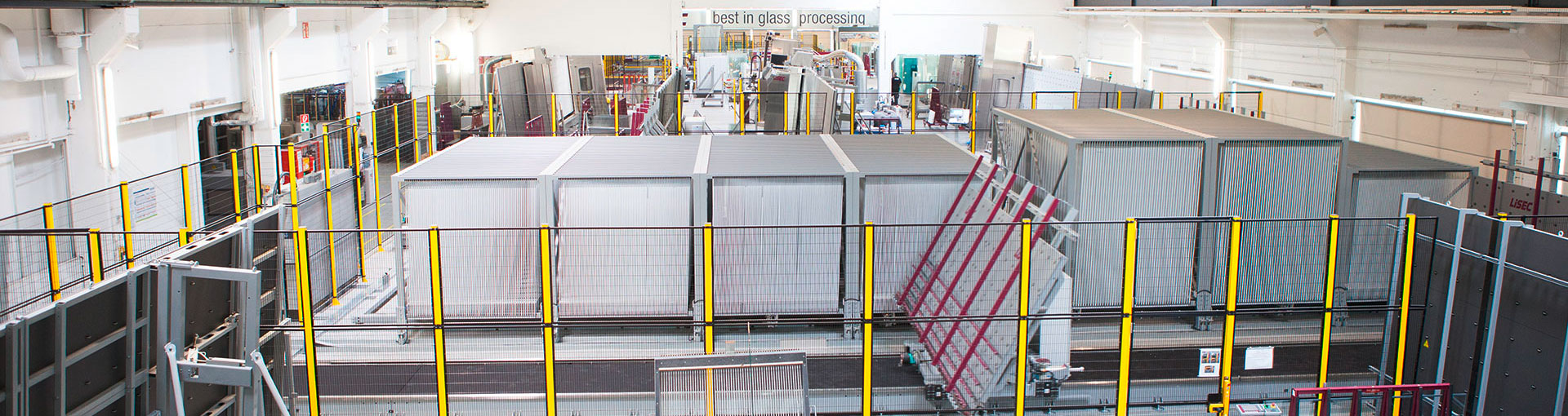
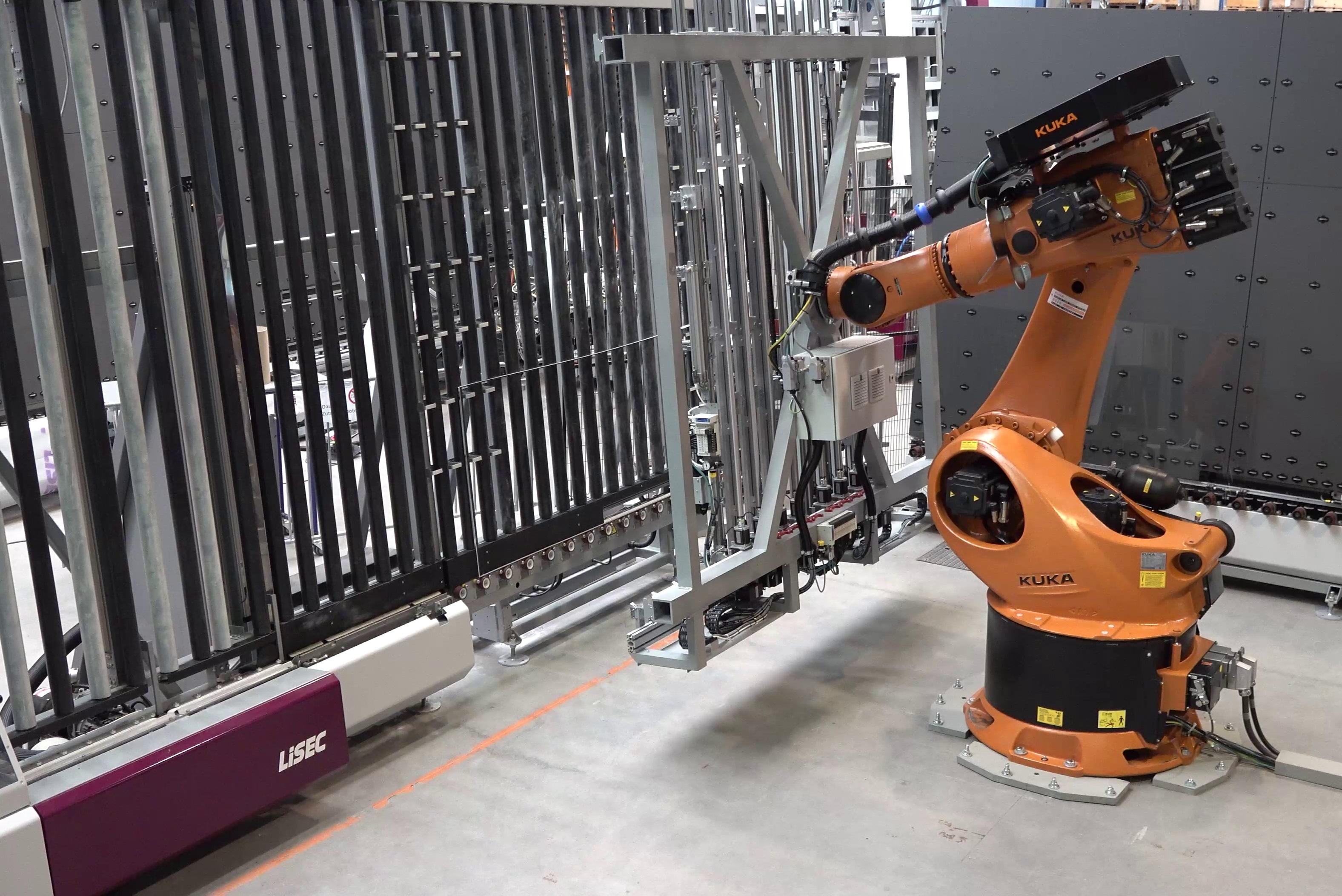
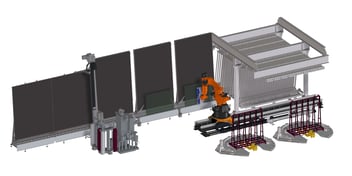
A modern insulating glass line consists of several process stations:
**1) Loading:** Glass panes are placed on the line manually or automatically
**2) Washing:** Cleaning of individual panes with brushes followed by drying
**3) Inspection:** Visual or machine check for contamination or defects
**4) Spacer frame placement:** Robots or operators position spacers precisely
**5) Assembly and gas filling:** Panes are aligned in the gas filling station, gas is added, and the glass unit is sealed
**6) Sealing station:** Final sealing with sealant for hermetic closure and mechanical stability
**7) Unloading:** Finished insulating glass is removed and prepared for shipping or further processing
Each station is designed for high precision and quality so that the final product meets the desired standards for thermal insulation, safety, and acoustics.
Each station is designed for high precision and quality so that the final product meets the desired standards for thermal insulation, safety, and acoustics.
Learn more about insulating glass in our podcast **LiSTEN LiSEC**.
[](https://www.facebook.com/lisecaustriagmbh/) [](https://at.linkedin.com/company/lisec-austria-gmbh) [](https://twitter.com/lisecgroup) [](mailto:info@lisec.com)
Subscribe
### Subscribe Via Email

##### Leave a comment
### Recommended Posts
[](https://blog.lisec.com/qualitypass?hsLang=en)
### [lis.qualitypass - Traceable quality in insulating glass production](https://blog.lisec.com/qualitypass?hsLang=en)
Quality plays a decisive role in insulating glass production. Customers rely on the properties of...
[](https://blog.lisec.com/vb-upgrades?hsLang=en)
### [Laminated glass cutting: Increase performance with retrofits](https://blog.lisec.com/vb-upgrades?hsLang=en)
Unlock the potential of your existing machines with our innovative retrofits. These five features...
[](https://blog.lisec.com/ig-sort?hsLang=en)
### [IG logistics reimagined: Automatic sorting of “wet” Elements](https://blog.lisec.com/ig-sort?hsLang=en)
Logistics is a crucial factor for success in the flat glass industry. While the sorting of cut...
#### I would like to receive information on new LiSEC products and services
Register now
##### About LiSEC
- [Locations & Contact](https://www.lisec.com/about-lisec/locations-contact/)
- [Company](https://www.lisec.com/about-lisec/company/)
- [Purchasing](https://www.lisec.com/about-lisec/purchasing/)
- [Careers](https://www.lisec.com/careers/working-at-lisec/)
- [Glass Forum](https://www.lisec.com/glass-processing/glass-forum/)
- [CE Declaration of Performance](https://www.lisec.com/glass-processing/ce-declaration-of-performance/)
##### Service
- [Training](https://www.lisec.com/service/training/)
- [FAQ](https://www.lisec.com/service/faq/)
- [Testing & Competence Center](https://www.lisec.com/service/training-service-center/)
- [My LiSEC](https://www.lisec.com/service/my-lisec/)
##### News
- [News](https://www.lisec.com/news/news/)
- [Events](https://www.lisec.com/news/events/)
- [Customer Magazine LEAD](https://www.lisec.com/news/customer-magazine-lead/)
- [Downloads](https://www.lisec.com/footer/news/downloads/)
- [Press contact](https://www.lisec.com/news/press-contact/)
##### Follow us
-
-
-
-
- [](https://www.karriere.at/b/lisec-austria#content)
- [](https://x.com/lisecgroup/)
- Copyright © 2023 LiSEC
- [Imprint](https://www.lisec.com/meta/imprint/)
- [Privacy Policy](https://www.lisec.com/meta/privacy-policy/)
- [Cookie Policy](https://www.lisec.com/meta/cookie-policy/)
#### best in glass processing
Settings for cookies and third-party applications
Cookies and third-party applications are used on our website. This helps us to guarantee the best possible performance of our website, especially
- the constant improvement of the functionality of our website (analysis of the user visit),
- a smooth experience when using the website or
- the placement of suitable advertising for users on certain platforms.
Do you consent to the use of cookies and the processing of personal data associated therewith?
Further information
Yes, I agree
Required These cookies ensure the basic functions of our website. This enables preferred settings to be made available to you again when you revisit the website. These include country and language settings. They also help to ensure the safe use of our website.
Functional We can analyse the use of our website using these cookies. They help us to constantly improve the functionality of our website.
Save
You can find more information on the use of cookies and opt-out options in our privacy statement.
You can amend your cookie settings at any time using the cookie settings link in the page footer. Please refer to our extensive [privacy statement](https://blog.lisec.com/meta/privacy-policy/?hsLang=en) for more information.
### LISEC NEWSLETTER SERVICE
[JETZT REGISTRIEREN](https://www.lisec.com/contact/data-verfication/?tx_form_formframework%5Baction%5D=perform&tx_theme_pi3%5Bcontroller%5D=RegistrationForm&cHash=78457fd789ddb12b5b2b33799e53eade)
### Follow us on:
-
-
-
-
-
-
- [](https://www.karriere.at/b/lisec-austria#content)
### ABOUT LISEC
- [Locations & Contact](https://www.lisec.com/about-lisec/contact)
- [Company](https://www.lisec.com/about-lisec/company/)
- [Purchasing](https://www.lisec.com/about-lisec/purchasing/)
- [Careers](https://www.lisec.com/careers/working-at-lisec/)
- [CE Declaration of Performance](https://www.lisec.com/competence/process-development/ce-declaration-of-performance)
### Service
- [Training](https://www.lisec.com/competence/after-sale-service/training/)
- [FAQ](https://www.lisec.com/competence/after-sale-service/faq/)
- [My LiSEC](https://www.lisec.com/competence/after-sale-service/mylisec)
### News & Aktuelles
- [News](https://www.lisec.com/news/news/)
- [Events](https://www.lisec.com/news/news/)
- [Downloads](https://www.lisec.com/footer/news/downloads/)
- [Press Contact](https://www.lisec.com/news/press-contact/)
- COPYRIGHT © 2024 LiSEC
- [IMPRINT](https://www.lisec.com/meta/imprint/)
- [PRIVACY POLICY](https://www.lisec.com/menus/meta/privacy-policy)
- [COOKIE POLICY](https://www.lisec.com/menus/meta/cookie-policy)
- [TRANSPARENCY LINE](https://hub.lisec.com/whistleblowing)
- [COOKIE SETTINGS](https://www.lisec.com/menus/meta/cookie-policy)
all.in.one:solutions
[](https://www.lisec.com/)