














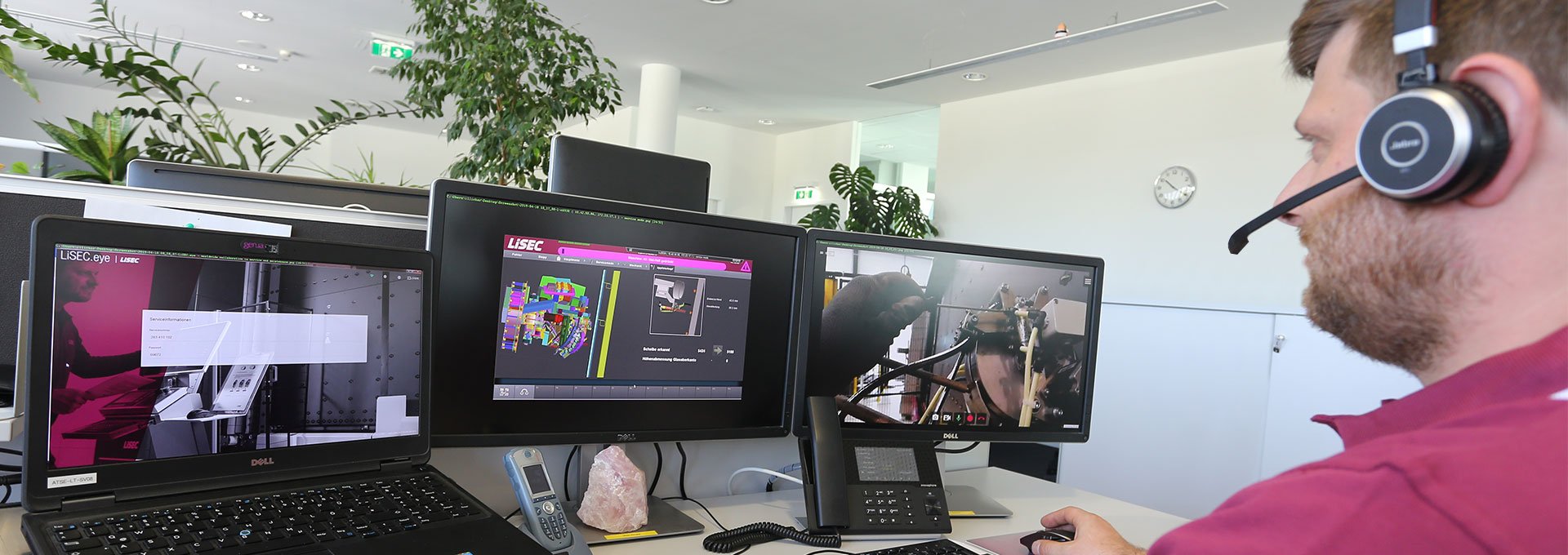
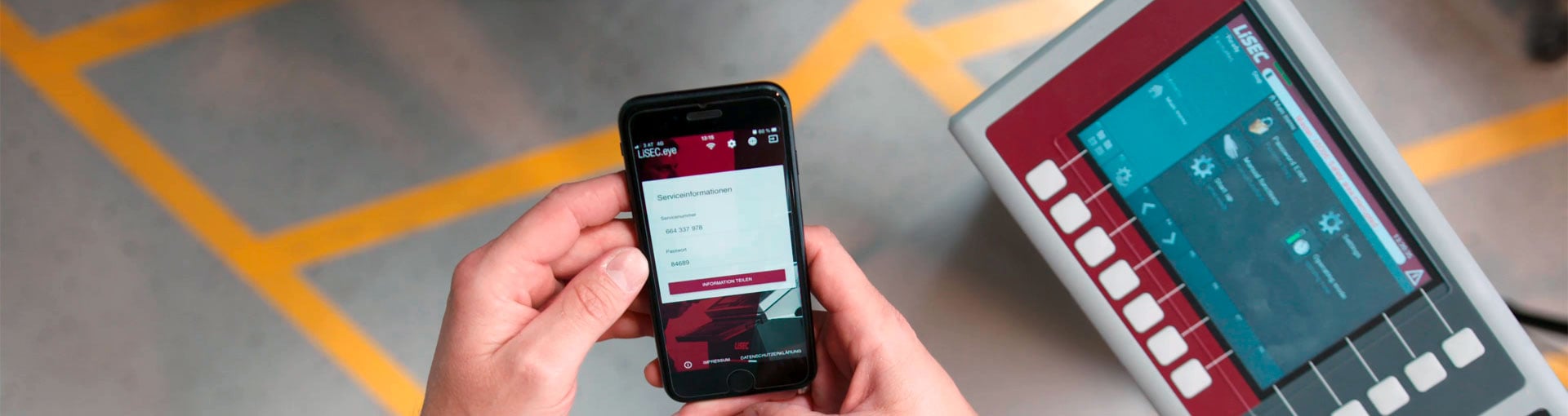


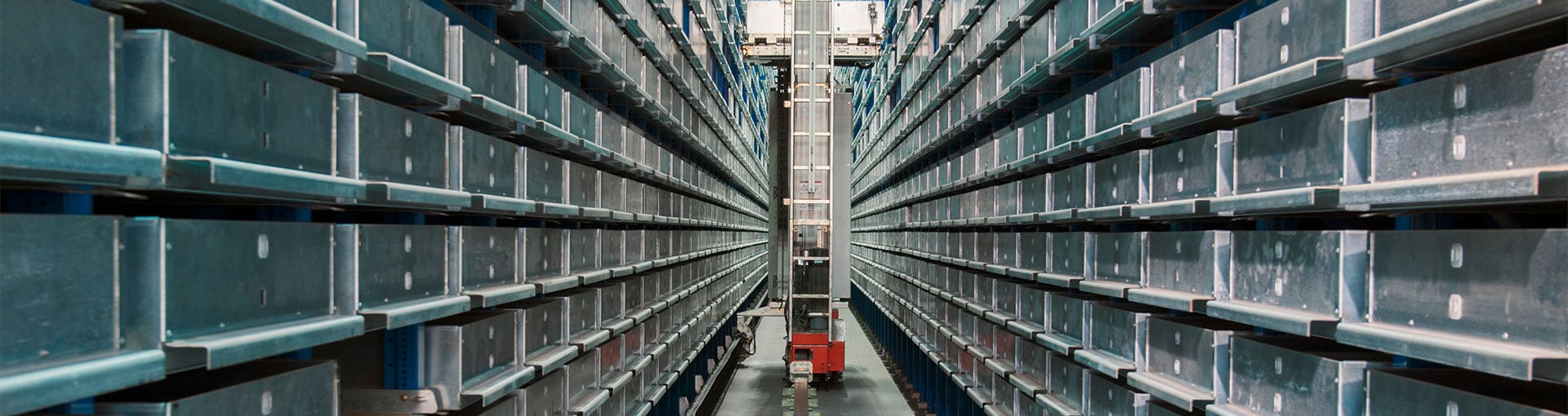



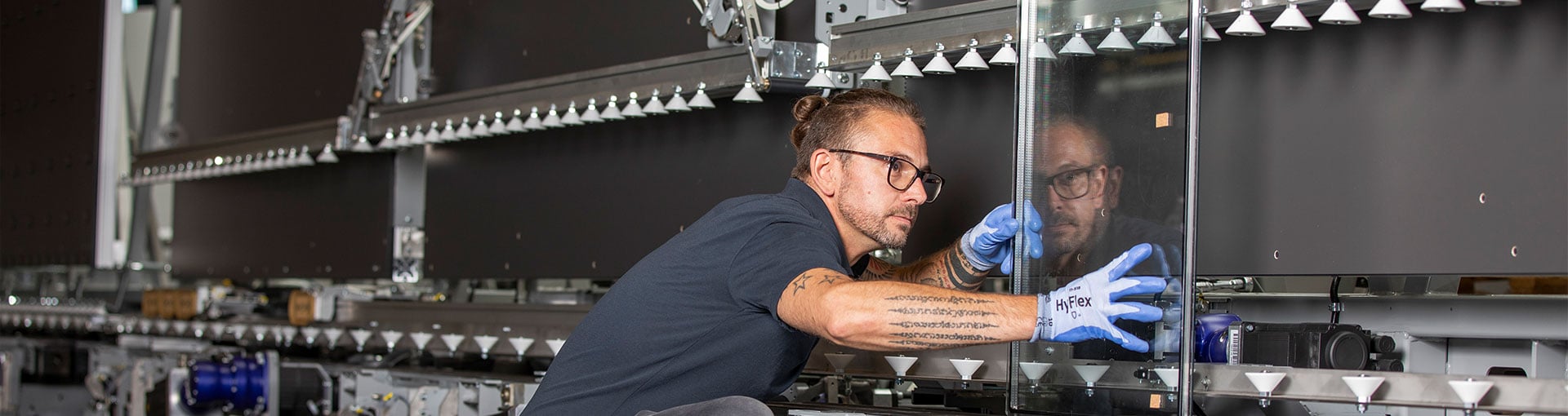







In flat glass processing, smooth operations depend on more than the performance of individual production steps. Equally important is how effectively planning, production, logistics, and dispatch work together. In day-to-day operations, additional coordination efforts, media discontinuities, and duplicate data entry often occur at the interfaces between these areas. How can information be managed throughout the entire process chain so that it is available exactly where it is needed?
Why Process Interfaces Matter
Production environments are constantly changing. New orders are added, priorities shift, bottlenecks arise, and unexpected events require adjustments. Rigid plans can only accommodate these changes to a limited extent. Rule-based and assistance systems are therefore designed to help make effective use of available resources and respond more flexibly to changing conditions.
This is not simply about digitising individual work steps. What matters is a continuous material and information flow that extends from order entry through production control and logistics to final delivery. LiSEC’s latest software generation is built on precisely this approach.
Four Areas, One Shared Information Flow
At glasstec 2026, LiSEC will demonstrate how software can create transparency, automate processes, and connect individual workflows more effectively. The focus will be on four solutions: lis.prodplanning 4, lis.rackmgmt 4, lis.logisticscockpit 4, and lis.dispatch 4.
1. Making Production Planning More Flexible
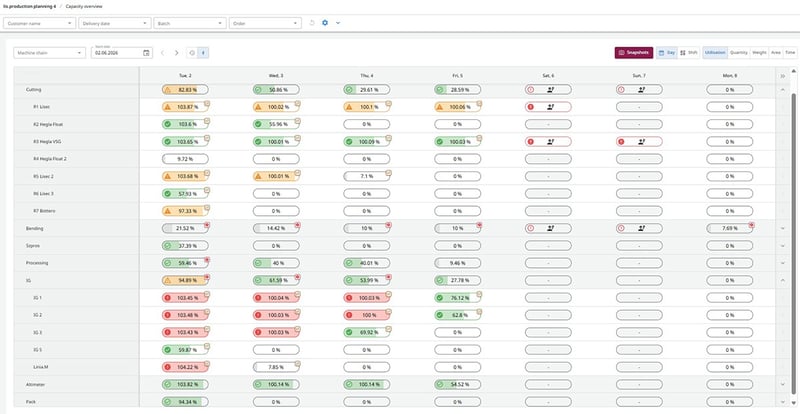
lis.prodplanning 4 represents the next generation of production planning. AI-supported Automatic Scheduling, together with rule-based and assistance systems, helps planners respond to new orders, changing priorities, bottlenecks, and other events. The goal is adaptive planning that can continuously adjust instead of following a rigid schedule created at a single point in time.
2. Optimising Rack Loading Intelligently
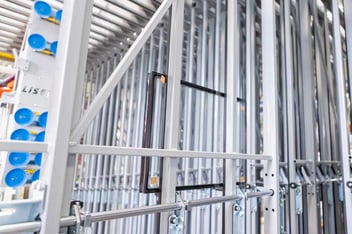
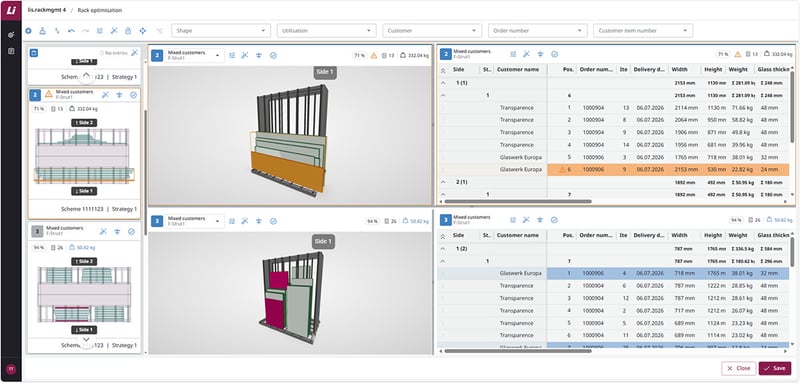
With lis.rackmgmt 4, the loading of transport racks is optimised based on a range of parameters. Algorithms calculate the arrangement of glass products while taking technical, logistical, and customer-specific requirements into account. As a result, rack planning becomes an integrated element of the overall material flow rather than an isolated task.
3. Automating Loading and Unloading Processes
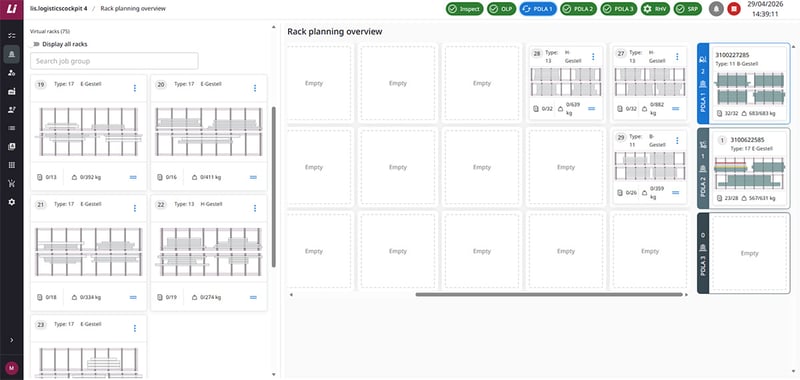
lis.logisticscockpit 4 builds on rack planning and controls automated loading and unloading operations using robots. In this way, the physical movement of materials is directly linked to digitally available planning information. Logistics becomes an integrated part of the digital material flow.
4. Extending the Information Flow into Dispatch
With lis.dispatch 4, the digital process chain extends all the way into dispatch logistics. When relevant information is continuously available, transport operations can be planned more efficiently and deliveries can be managed more reliably. This creates a foundation for improved on-time delivery performance and enhanced customer service.
What Practical Benefits Does This Create?
Connecting these four areas does not result in a single isolated optimisation step. Instead, it supports a seamless workflow across the entire process chain:
- Greater transparency: Information is available throughout the material and information flow.
- Fewer media discontinuities: Data reaches the point where it is needed without duplicate data entry.
- More flexible planning: Assistance systems support responses to changing priorities, bottlenecks, and new orders.
- Integrated logistics: Rack optimisation as well as automated loading and unloading processes become part of the digital material flow.
- More reliable deliveries: Consistent information improves transport planning and supports on-time delivery performance.
Availability and Further Information
The software solutions lis.prodplanning 4, lis.rackmgmt 4, lis.logisticscockpit 4, and lis.dispatch 4 will be presented from 20–23 October 2026 at glasstec 2026 at the LiSEC booth, Hall 17 / A64.
Summary
A seamless digital material and information flow connects planning, production, logistics, and dispatch. When information is available without unnecessary barriers and assistance systems support day-to-day operations, processes can become more flexible, more transparent, and more reliable.